What a Hardstuck Marvel Rivals Player Looks Like in 2026 When a Grandmaster Spectates
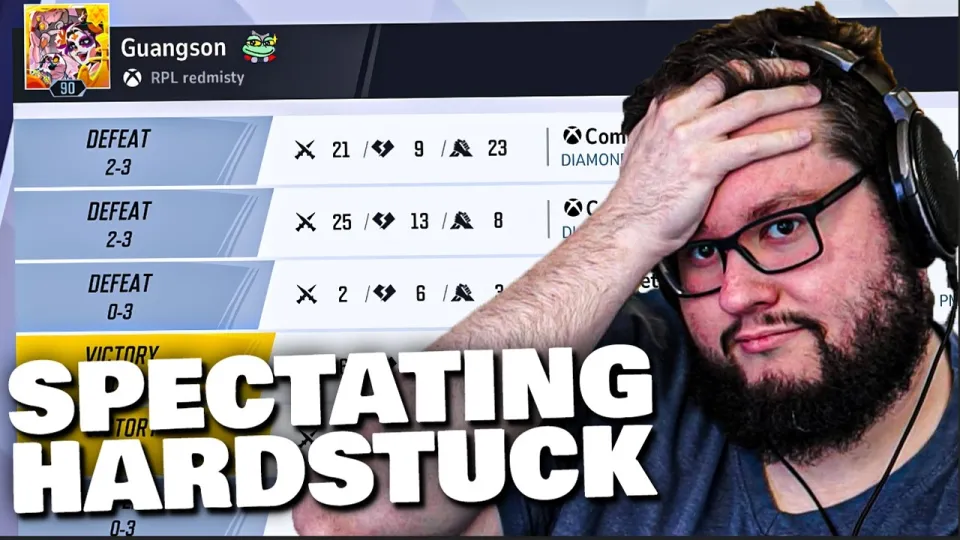
Video: I Spectated Someone Who Claimed To Be Hardstuck In Marvel Rivals
Want articles like this for your own video to promote it on YouTube and Google? Order them through the Telegram bot @sat_sit_bot. Articles with your video embedded are written and posted by the bot itself — on popular topical sites (no ads). Try it free: 50 articles on us.
· based on the channel Flats
Marvel Rivals is a team game, and the fastest way to stay stuck is to believe your teammates are the reason. When a player who called himself hardstuck asked for a review, Flats spectated his matches on stream and found the opposite of what the player expected: the rank was fine, the habits were not. You can watch Flats live and judge the same replays yourself at his Twitch channel.
The review turned into one of the more instructive Marvel Rivals VOD breakdowns of the season, because the player's problems were not exotic. They were the same four or five mistakes that show up in almost every ranked lobby below the top of the ladder: ego, role confusion, poor map awareness and zero accountability.
Why a self-described hardstuck Marvel Rivals player got spectated
The player opened with the classic complaint: the rank does not reflect his skill, and teammates are holding him back. That framing is what made the review worth doing, because it sets up a testable claim. If teammates are the problem, the individual decisions should still hold up under scrutiny.
They did not. Across the matches reviewed, the same issues repeated:
- Positioning that left the player exposed or out of healing range of his own team.
- Ultimates used without setup, then blamed on follow-up that never came.
- A refusal to swap when the composition clearly needed something else.
- Walking past a health pack while looking for a health pack.
That last one became the running joke of the stream, but it is also the cleanest illustration of the point: a player can be genuinely unaware of the map around him and still be convinced the loss came from someone else's play.
What the Marvel Rivals Grandmaster gameplay actually showed
The most uncomfortable detail is the rank itself. This was not a low-tier lobby. The player sat in Grandmaster, a rank that in Marvel Rivals should represent solid mechanical skill and at least basic game sense. The review showed neither consistently.
Key problems visible in the spectated matches:
- Healing discipline: as Cloak & Dagger, the player effectively played Dagger only, holding the Cloak half of the kit and never using it for escapes or pressure.
- Damage contribution: a Rocket Raccoon game produced almost no meaningful damage or utility value, which undercuts the popular idea that a "no damage Rocket" is a viable way to climb.
- Ultimate timing: a Magneto ultimate whiffed so badly that the character's collapse felt like a verdict on the whole match.
- Awareness: the health pack moment, where the player strolled past a pack while hunting for one, summed up the tunnel vision.
None of these are mechanical failures. They are decisions, and decisions are exactly what a VOD review can fix — if the player is willing to hear it.
The ego problem behind a negative win rate in Marvel Rivals
Climbing with a losing record is possible in Marvel Rivals, and that is the core of the complaint many players have about ranked. Performance-based rating, placement luck and a large player base mean a player can drift upward while winning fewer than half of his games. The rank then becomes evidence in the player's mind that the criticism is wrong.
That is the trap. A rank is a snapshot of results, not a certificate of understanding. When a player with a negative win rate insists the team is the issue, the review has to separate two questions:
- Did the teammates make mistakes? Almost certainly, in every match ever played.
- Did the player's own choices create avoidable losses? In this case, repeatedly.
The second question is the only one a player can act on, which is why the "my team holds me back" framing is so costly. It converts every loss into evidence for a belief instead of a lesson.
Why Spider-Man mains get singled out in these reviews
The player's background as a Spider-Man main came up, and it fit the pattern almost too well. Dive heroes reward individual aggression and highlight-reel plays, and they punish players who never learn to read a fight before committing. A Spider-Man player who never takes responsibility for a failed dive will keep diving, keep dying, and keep blaming the healers who could not reach him.
That is not an argument against dive heroes. It is an argument for reviewing your own deaths before you review your teammates' healing totals. If you main a flanker, the first question after every death should be whether the engage was ever survivable, not whether someone should have followed you in.
Common doubts from Marvel Rivals players watching this kind of review
Reviews like this always produce the same objections, and they are worth answering directly.
"Everyone gets bad teammates sometimes." True, and irrelevant to improvement. The question is not whether bad teammates exist but whether your own play gave the team a chance. A player who walks past health packs and wastes ultimates is not losing because of matchmaking.
"Grandmaster means he is good." Rank measures outcomes across many games, and Marvel Rivals' system can carry a player upward on volume. A Grandmaster badge does not guarantee that every fundamental is in place, which is exactly why spectating is more useful than inspecting a rank icon.
"Support players cannot carry." Supports carry through cooldown usage, ultimate timing and staying alive. Playing half a character — Dagger without Cloak — throws away tools the kit was designed around and turns a flexible support into a heal turret.
"This is just content, not real coaching." A public review is harsh, but the format works because the mistakes are visible and repeatable. The same checklist — positioning, cooldowns, ultimate value, awareness — applies to any player's own replays.
How to use this Marvel Rivals review to fix your own ranked games
Anyone can run the same audit on their own matches without a streamer. Record three losses, then watch them back with the scoreboard hidden so the numbers do not bias you.
- Pause on every death and name the decision that caused it.
- Check whether your ultimate was used with a teammate ready to follow up.
- Count how many times you left cover or healing range for no gain.
- Note every time you swapped heroes — or should have.
- Ask whether your support pick used the full kit or only the comfortable half.
If more than half of your deaths trace back to your own choices, the rank is not the problem. That is the entire lesson of the spectate, delivered with more sarcasm than the player was ready for.
All the links from the Flats stream
- Live channel: https://www.twitch.tv/flats
- Discord community: https://discord.gg/flats
- Twitter/X: https://twitter.com/Flats_Ow
- TikTok: https://www.tiktok.com/@flats_ow
- Facebook: https://www.facebook.com/FlatsTTV
Final thoughts on the hardstuck Marvel Rivals spectate
Flats built this breakdown around a player who volunteered to be examined and then discovered the problem was never the lobby. The review is funny, but its value is diagnostic: role confusion, wasted ultimates, missed health packs and an ego that treated Grandmaster as proof rather than a starting point. Anyone stuck in Marvel Rivals can copy the method — hide the scoreboard, watch your own deaths, and count the mistakes that were yours. For more live reviews and ranked breakdowns, tune in to Flats on Twitch and see the next spectate unfold in real time.
Key takeaways
- Flats spectated a Marvel Rivals player who insisted his rank was the fault of teammates, not his own play.
- The player was in Grandmaster despite what the review showed: poor positioning, missed health packs and no accountability.
- He played Cloak & Dagger as a Dagger-only heal bot and also ran a low-damage Rocket Raccoon.
- A Spider-Man main background explained the pattern of blaming others instead of reviewing mistakes.
- The lesson: ranked inflation and ego can carry a negative win rate higher than the skill level deserves.
Source: I Spectated Someone Who Claimed To Be Hardstuck In Marvel Rivals · Markdown version
Questions & answers
Is it possible to climb in Marvel Rivals with a negative win rate?
Yes. Ranked systems in hero shooters reward volume and can move a player upward even below a 50% win rate, especially with performance-based adjustments and placement luck. That is why a high rank is not proof of strong fundamentals, and why players can reach Grandmaster while still making basic positioning and cooldown errors.
Why do so many Marvel Rivals players blame their teammates instead of their own play?
Blame protects ego. Focusing on a teammate's mistake is easier than admitting a death was avoidable, so the same errors repeat every match. Reviews that hide the scoreboard and examine each death force the player to separate the two questions: did the team err, and did I give the team a chance.
What is wrong with playing Dagger only as Cloak & Dagger?
Cloak & Dagger is designed as a two-form kit. Ignoring Cloak removes escape tools, damage pressure and utility that the support role depends on. Playing the character as a pure heal bot limits your impact and makes it easier for enemy dive heroes to punish you.
How do I review my own Marvel Rivals matches like a coach?
Record three losses and watch them with the scoreboard hidden. Pause on every death, name the decision behind it, check whether your ultimates had follow-up, and note when a hero swap was needed. If most deaths trace back to your own choices, the rank is not what is holding you back.